
Why Try? The Impact of Screen Time

September 23, 2024

Let’s face it. Parenting is hard. And frankly, things seem so much easier when our children are occupied with an television show, iPad, or similar device. Plus, they need skills for the digital world. And that’s how kids connect today, right?


So much pulls us toward more tech time for our children. But is this really what is best for their development? A study from August 2023 found that screen time for one-year-olds leads to developmental delays in communication and problem-solving when the children are aged two and four.  


The impact continues as our children get older. Jonathan Haidt explains the high costs of a phone-based childhood in his book The Anxious Generation—How The Great Rewiring Of Childhood Is Causing An Epidemic Of Mental Illness. The first section of the book outlines the decline in teen mental health and well-being since the smartphone took over our lives. Haidt argues that this new technology, along with parental overprotection, has shifted our children’s lives from play-based experiences to an unprecedented state of fragmentation, disconnection, and even deprivation. 


It’s interesting to hear children’s thoughts on this topic, too. When asked, kids are pretty self-aware of the impact screen time has on their lives. They speak about how they can be disconnected from others when they are on their devices and how getting outside actually helps them feel better. Young people also recognize that screen time can lead to crankiness, headaches, and even not-great sleep. They can identify “video game brain” and how hard it is to come out of that state. Young people are self-aware enough to notice how it’s easy to fall into an expectation that screen time will soothe a bad day but that in reality, it doesn’t and how taking a walk would be so much better. 


Families whose children participated in Screen-Free Week from May 6 to 12 shared some lovely results. During that week, their children were kinder, better able to regulate their emotions, and more present in what they were doing. Children reported reading more, spending more time with their family, and reveling in being outside.


So, what do we do? Our lives are so intertwined with technology that breaking already established habits can seem insurmountable.


One first step is to be open with our children. For younger children, this can be as simple as setting limits and stating that things will be changing. Our little ones rely upon us to set the routine. They will test us, of course, because they need to know if we are going to hold true to a limit. But the process is pretty straightforward: decide to limit screen time and stick with the plan. 


If moving toward less screen time seems daunting, also remember that we can call upon our community! Make a commitment with other families and find ways to support each other. Publicly state your intent and goals. Share successes and challenges. Plan screen-free playdates and organize experience-based outings.  


Our children deserve the best we can offer them during the crucial developmental period of early childhood. Yes, giving them an iPad or letting them watch another show can give us a little respite, but are these choices really serving our children well?


For additional support and resources, visit:


The Anxious Generation  

Screen-Free Week 

Screen Time Action Network 


Please also feel free to contact us. At our school, we prioritize a play-based childhood and are happy to share more about what we do!
By Katherin Castro Hoyos, Lead Toddler Guide • October 22, 2026
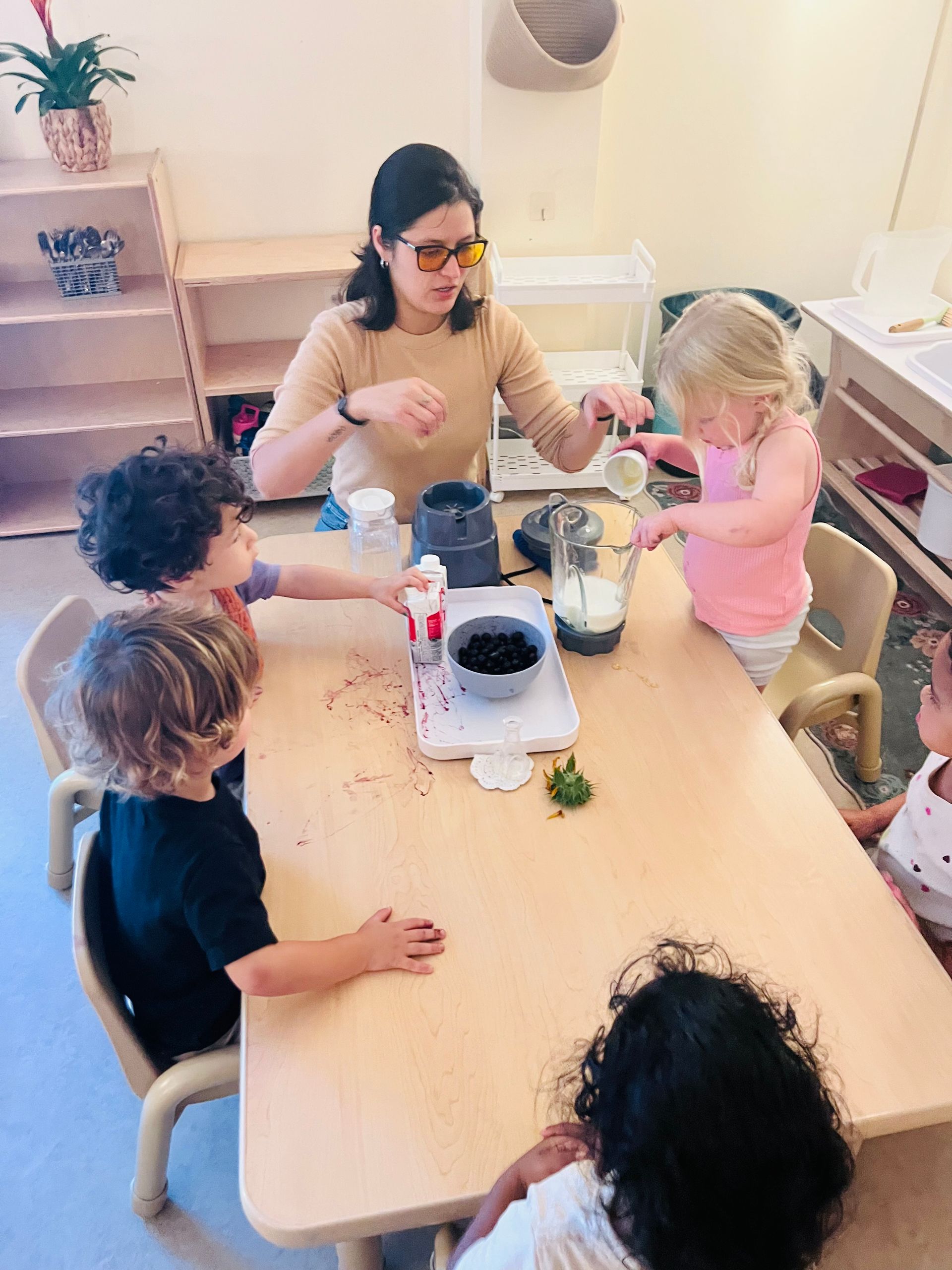
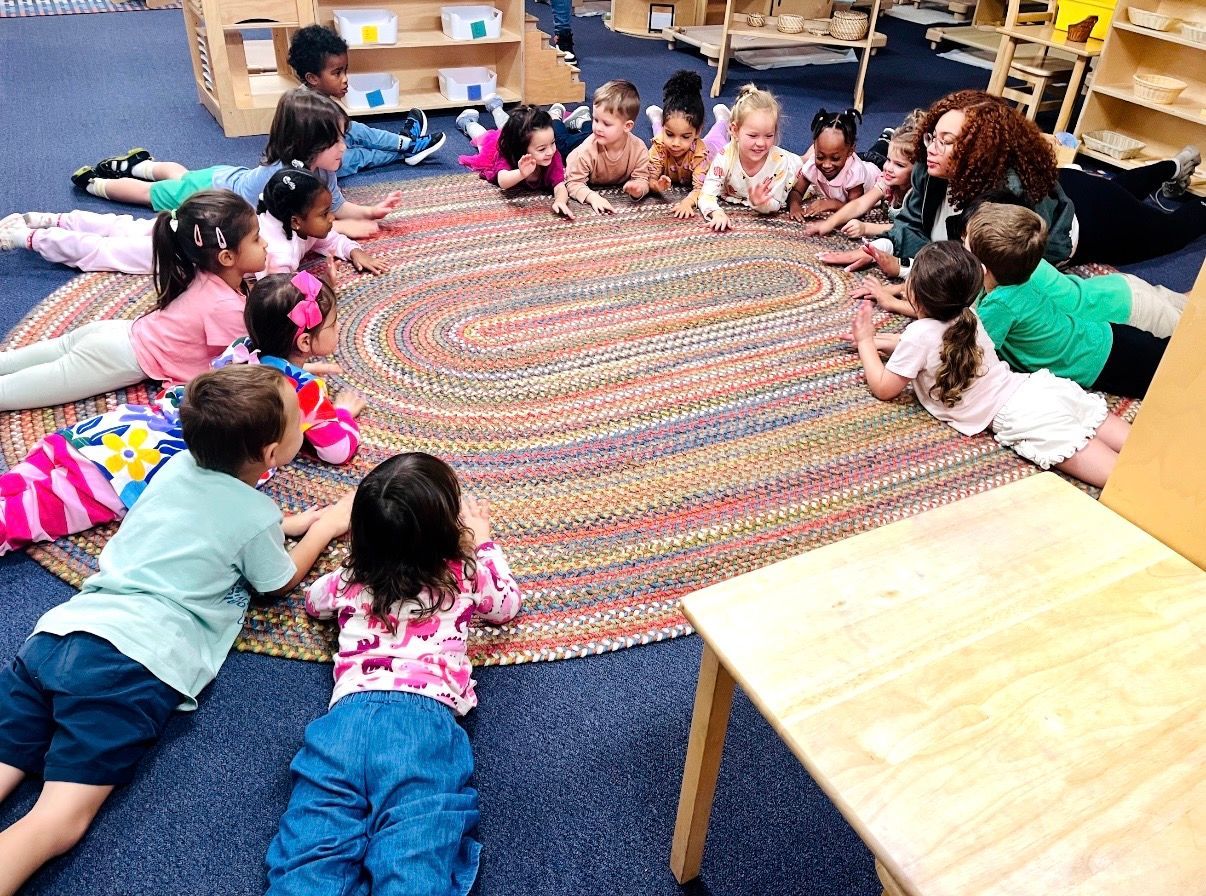
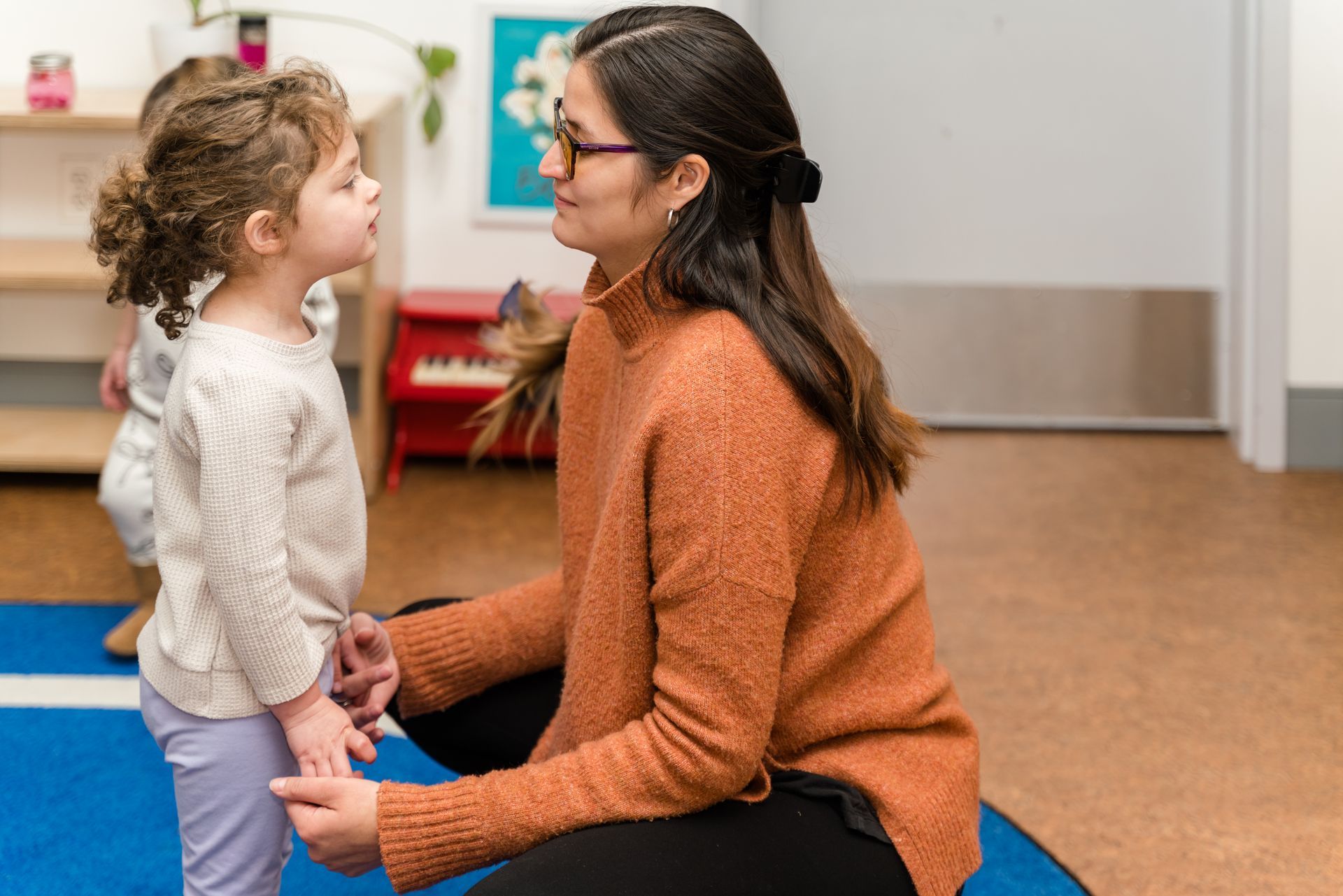
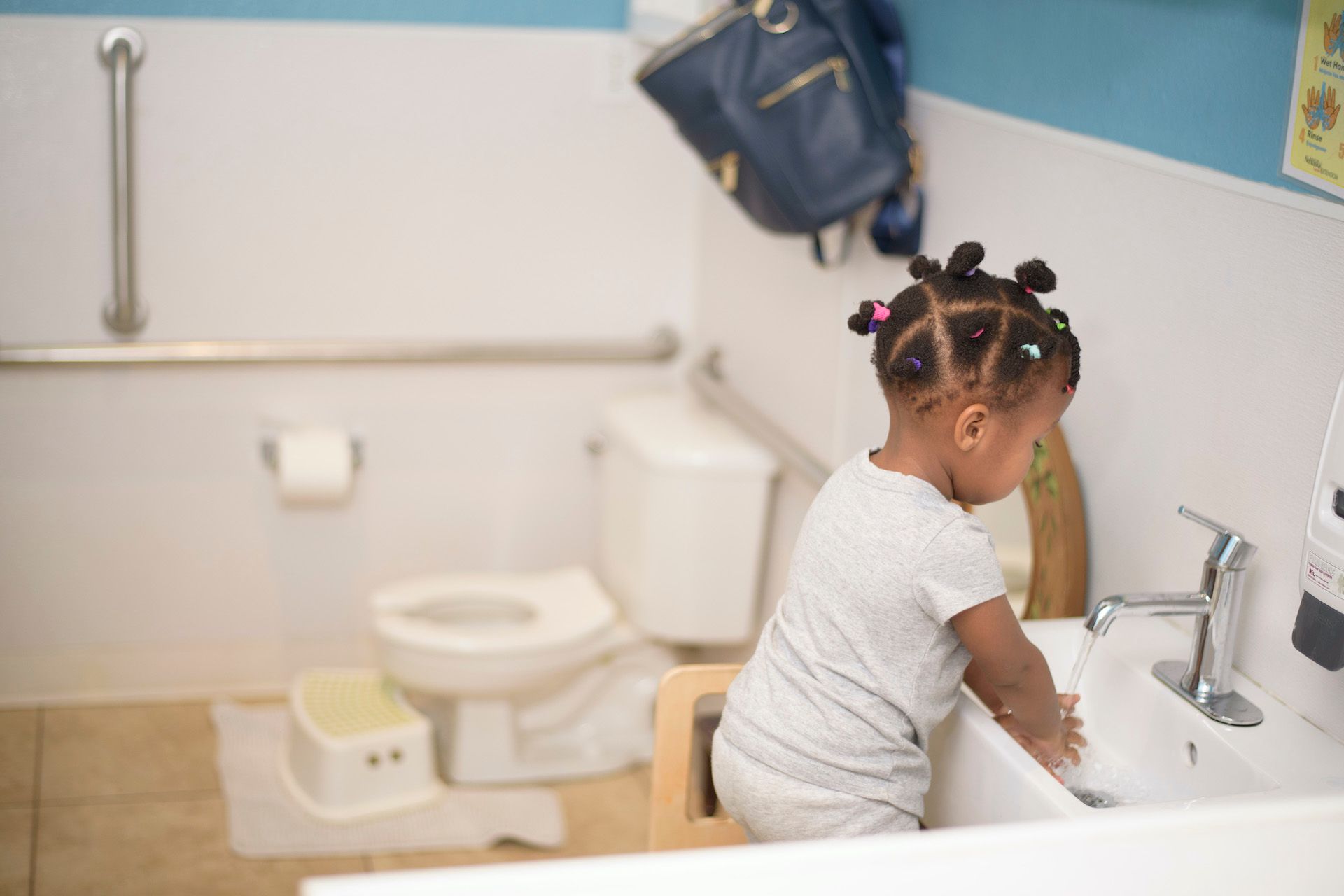
In the Montessori environment, we talk a lot about independence. But how does independence actually develop? How can we, as adults, support a child on this path? One of the first steps toward independence begins with movement. As the child starts to separate from the caregiver physically —moving, crawling, walking, reaching, and exploring— they begin to discover something profound: I can do things by myself. I can reach for something without being carried there. I can move toward what interests me. I can try. But before children can become independent, they depend on us. And the way we relate to them during this period of dependence makes a difference in their journey toward independence. From Doing For the Child to Doing With the Child At the beginning, especially in a toddler classroom, we do things with the child, not for the child. We guide them through each step. We show them how to push their pants down, where to place the diaper when it is wet, how to get water from the sink into a pitcher and how to pour the water, how to touch others gently, how to ask for a hug, and how to respect and accept it when someone does not want a hug. Sometimes we show them once and sometimes we show them what feels like an innumerable number of times! And then, they start doing it by themselves. Isn't this amazing? This is the growth of independence, and alongside independence grows something equally important: self-confidence. Independence Does Not Mean Doing Everything Alone At the same time, being independent does not mean that we no longer need other people. Human beings are interdependent. We rely on one another, learn from one another, and grow through our relationships with one another. Needing someone does not mean that we are incapable. This is one of the beautiful things about the mixed-age Montessori environment. The teachers are not the only ones showing children how to do things. When a child has mastered a skill, we can invite that child to show another child who has not yet mastered it. “Can you show Eli how to clean his nose?” The child will happily help. In that simple interaction, one child is learning a new skill, while the other is experiencing what it feels like to contribute and share knowledge. Both children are growing. This is interdependence: I can do things for myself, and I can also be part of something bigger than myself. Let Them Struggle If we want independence to develop, the child needs opportunities to struggle. Let them struggle when they are trying to put on their socks. Let them attempt to pour the water even when some of it spills. This can be difficult for us as adults because sometimes it is much easier and faster to simply do it for them. We can see the sock is inside out and we know exactly what needs to happen next. But if we always step in before the child has had the opportunity to try, we may unintentionally communicate: You need me to do this for you. Instead, we can practice patience, staying close, observing and offering just enough help for the child to continue. This does not mean leaving a child alone with frustration. It means staying with them without taking over. Sometimes the right amount of help might be showing the movement slowly. We can exaggerate the movement so the child can clearly observe it and begin to internalize it. Sometimes it might be holding the sock open while allowing the child to put their foot inside. Sometimes it might simply be saying, “You can do it. Keep trying.” The Gift of Trying Again Frustration is not necessarily something we need to rescue children from. It is a feeling they can experience, move through, and learn from —with the presence of a supportive adult. When we allow children to experience the difficulty of something while communicating, “I know you can do this”, we give them an opportunity to discover their own competence. And when they finally succeed, no one can take that experience away from them. They have learned something much bigger than how to put on a sock. They have learned: Something can be hard, and I can keep trying. I can ask for help when I need it. I can try again. These experiences become part of the child's developing sense of self. They begin to internalize a sense of competence that will stay with them long after the sock. Independence comes through interdependence, and the beauty of childhood —and of being human— is found in this ongoing dance of holding and letting go, over and over again.
By ToTH Montessori • October 20, 2026
Welcome to ToTH@Home - Our Blog for Families Who Love Montessori!
February 21, 2025
In Montessori, discipline is about understanding misbehavior as communication of unmet needs, addressed with empathy and proactive support.
February 10, 2025
The toilet learning process for young children takes time but doesn’t have to feel daunting. Here are some key aspects of toileting the Montessori way.
Show More