A Sprinkling of Holiday Ideas

December 6, 2024

Involve children in holiday preparations to build life skills, independence, and joy with simple, hands-on activities that promote calm and cooperation.


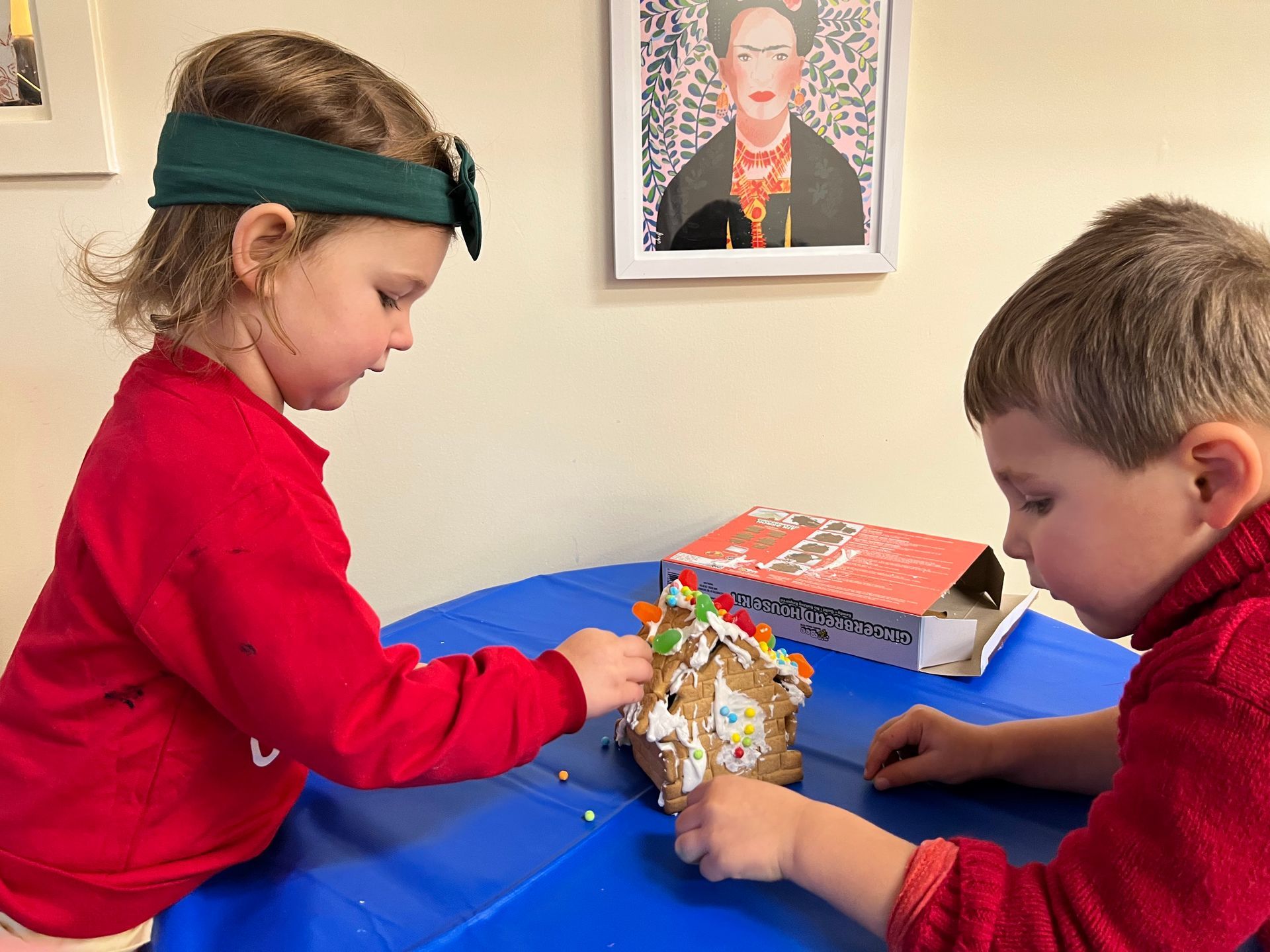
We have seen how children feel more grounded and cooperative when they have a role to play. Thus, whenever possible, it’s helpful to find little (and sometimes big!) ways for children to help with holiday preparations. Children’s active participation helps them develop important life skills, and also helps them better adapt to changes in holiday rhythms and routines.


We wanted to share a few ideas on incorporating Montessori principles into holiday celebrations and time with family this holiday season. Above all, we advocate for keeping the holiday season calm and joyful! So, we offer this sprinkling of options during a time when we have a lot going on in our lives and with our families. If even one can help sweeten your time together, fabulous!


Children’s participation can take a variety of forms. Choosing meaningful activities that don’t cause more stress and strain is important. Here are a few of our favorites!


Holiday Decorating


If your family enjoys decorating, consider creating a child-sized decoration station, perhaps with a small tree or table at your child’s height. They can practice hanging ornaments, placing candles, arranging decorations, and generally having a hand in creating their own festive space. Of course, if it feels right, they can also add to the general household decorations!


Gift Wrapping


When preparing gifts for family and friends, consider setting up a simple wrapping station with materials appropriate to your child’s age and abilities. They can help tape, cut paper, add ribbon, decorate tags, or even add colorful scribbles to butcher or white paper. Child-decorated wrapping paper tends to be a family favorite! Plus, the skills involved with wrapping encourage fine motor development! Older children might appreciate step-by-step instructions on measuring the wrapping paper, folding it around a gift, and taping it securely. The youngest ones might appreciate a simple process of placing items into fabric gift bags and tightening the drawstrings.


Baking and Cooking


Allowing children to participate in creating, baking, and decorating holiday treats often provides a huge sense of pride and accomplishment. There are all sorts of simple, manageable steps in this process, from pouring remeasured ingredients into a bowl, to kneading dough, to using cookie cutters, to adding icing or sprinkles. It’s nice to have child-sized tools like small spatulas, whisks, and rolling pins whenever possible.


Setting the Holiday Table


Children can also help create or select a centerpiece for the table. If possible, they can even use natural or found items. A little collecting walk may uncover natural beauties, like pine branches or pinecones. Table-setting is a big part of the Montessori experience, so placing utensils, napkins, and dishes is a natural way to involve children in getting ready for guests or a meal! Children like learning the correct placement of each item, and table setting is a great opportunity to reinforce counting and one-to-one correspondence.


We recommend modeling for younger children how to carry one item at a time, for example, making multiple trips to get one fork and then the next. Once children learn this process, they can be quite independent and thus can stay focused and busy as they go back and forth. If time is of the essence, an adult can bring a tray of forks to the table for children to place at each setting. Older children prefer to find more efficient ways to manage the process!


Making Handmade Gifts or Donation Decisions


We can help our children learn about the importance of giving and gratitude by involving them in decisions about charitable giving or donations. They can help pick out toys for our holiday to drive, or clothes or assist in preparing gift baskets for families in need. We can also support our children in making handmade gifts, which can foster their creativity and thoughtfulness. Depending upon the intricacy of the process, handmade gifts can range from simple crafts like beaded jewelry or friendship bracelets to hand-drawn cards or framed artwork to homemade ornaments or decorations created from clay or salt dough. Ultimately, the goal is to encourage generosity and thoughtfulness while giving children a sense of accomplishment in gift-giving.


Simple, Predictable, and Calm


Young children are especially sensitive to routines and changes to routines, so whatever you choose to do, remember to manage holiday overwhelm by keeping activities simple, maintaining predictable routines, and cultivating a calm space. By involving children in holiday preparations, we can create meaningful memories and promote independence, responsibility, and creativity. Plus, children appreciate hands-on experiences and real-world activities.
By Katherin Castro Hoyos, Lead Toddler Guide • October 22, 2026
In the Montessori environment, we talk a lot about independence. But how does independence actually develop? How can we, as adults, support a child on this path? One of the first steps toward independence begins with movement. As the child starts to separate from the caregiver physically —moving, crawling, walking, reaching, and exploring— they begin to discover something profound: I can do things by myself. I can reach for something without being carried there. I can move toward what interests me. I can try. But before children can become independent, they depend on us. And the way we relate to them during this period of dependence makes a difference in their journey toward independence. From Doing For the Child to Doing With the Child At the beginning, especially in a toddler classroom, we do things with the child, not for the child. We guide them through each step. We show them how to push their pants down, where to place the diaper when it is wet, how to get water from the sink into a pitcher and how to pour the water, how to touch others gently, how to ask for a hug, and how to respect and accept it when someone does not want a hug. Sometimes we show them once and sometimes we show them what feels like an innumerable number of times! And then, they start doing it by themselves. Isn't this amazing? This is the growth of independence, and alongside independence grows something equally important: self-confidence. Independence Does Not Mean Doing Everything Alone At the same time, being independent does not mean that we no longer need other people. Human beings are interdependent. We rely on one another, learn from one another, and grow through our relationships with one another. Needing someone does not mean that we are incapable. This is one of the beautiful things about the mixed-age Montessori environment. The teachers are not the only ones showing children how to do things. When a child has mastered a skill, we can invite that child to show another child who has not yet mastered it. “Can you show Eli how to clean his nose?” The child will happily help. In that simple interaction, one child is learning a new skill, while the other is experiencing what it feels like to contribute and share knowledge. Both children are growing. This is interdependence: I can do things for myself, and I can also be part of something bigger than myself. Let Them Struggle If we want independence to develop, the child needs opportunities to struggle. Let them struggle when they are trying to put on their socks. Let them attempt to pour the water even when some of it spills. This can be difficult for us as adults because sometimes it is much easier and faster to simply do it for them. We can see the sock is inside out and we know exactly what needs to happen next. But if we always step in before the child has had the opportunity to try, we may unintentionally communicate: You need me to do this for you. Instead, we can practice patience, staying close, observing and offering just enough help for the child to continue. This does not mean leaving a child alone with frustration. It means staying with them without taking over. Sometimes the right amount of help might be showing the movement slowly. We can exaggerate the movement so the child can clearly observe it and begin to internalize it. Sometimes it might be holding the sock open while allowing the child to put their foot inside. Sometimes it might simply be saying, “You can do it. Keep trying.” The Gift of Trying Again Frustration is not necessarily something we need to rescue children from. It is a feeling they can experience, move through, and learn from —with the presence of a supportive adult. When we allow children to experience the difficulty of something while communicating, “I know you can do this”, we give them an opportunity to discover their own competence. And when they finally succeed, no one can take that experience away from them. They have learned something much bigger than how to put on a sock. They have learned: Something can be hard, and I can keep trying. I can ask for help when I need it. I can try again. These experiences become part of the child's developing sense of self. They begin to internalize a sense of competence that will stay with them long after the sock. Independence comes through interdependence, and the beauty of childhood —and of being human— is found in this ongoing dance of holding and letting go, over and over again.
By ToTH Montessori • October 20, 2026
Welcome to ToTH@Home - Our Blog for Families Who Love Montessori!
February 21, 2025
In Montessori, discipline is about understanding misbehavior as communication of unmet needs, addressed with empathy and proactive support.
February 10, 2025
The toilet learning process for young children takes time but doesn’t have to feel daunting. Here are some key aspects of toileting the Montessori way.
Show More